In recent years, no manufacture has witnessed a more dramatic or record-shattering surge in secondary market values than F.P. Journe. Indeed, no watchmaker in history has attained comparable global prominence, intellectual reverence and commercial triumph within his own lifetime.
Yet, this deific status is a remarkably recent phenomenon. As late as 2016, F.P. Journe wristwatches remained an insider’s delight rather than untouchable six-to-eight-figure trophies. Collectors could stroll into a boutique and acquire most references straight from the vitrine, whilst pre-owned examples routinely changed hands at a 20 to 40 per cent discount against retail.
It took a convergence of cultural re-evaluation, scholarship and uncompromising technical genius to awaken the broader collecting world to François-Paul Journe’s brilliance—igniting an insatiable global appetite that has redefined modern horology.
The Birth of a Visionary: François-Paul Journe’s Early Years
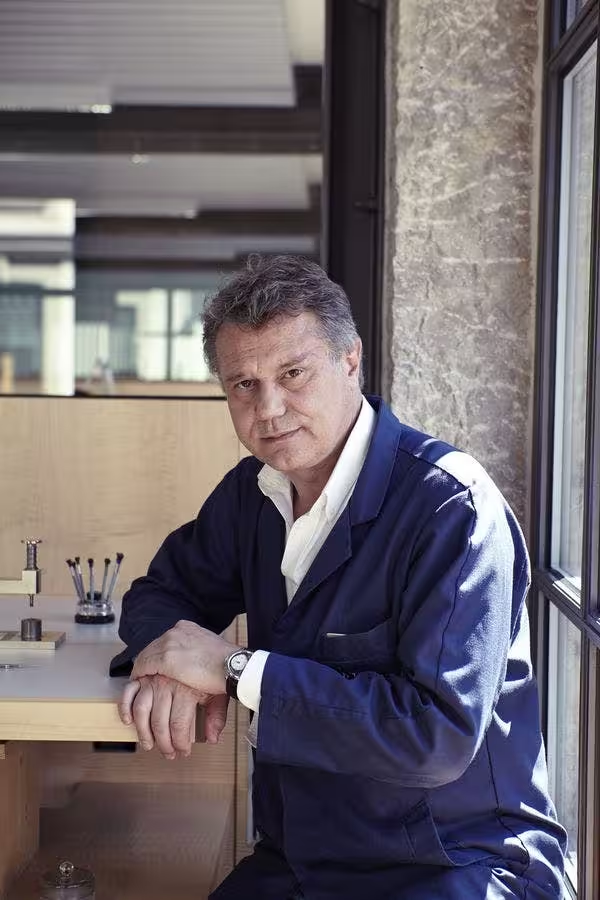
A consummate artisan who bridges 18th-century French chronometry with relentless modern ingenuity, François-Paul Journe was born in Marseille in 1957. By his own admission, he was an unruly youth, expelled from school at the age of fourteen. Salient guidance from his family saw his fierce, restless energy channelled into craft when he enrolled at the Marseille Watchmaking School in 1972. There, his innate gifts surfaced, culminating in his graduation from the École d'Horlogerie de Paris in 1976.
Journe soon entered the Saint-Germain-des-Prés atelier of his uncle, Michel Journe, an esteemed restorer of antique horology, where he immersed himself in the mechanical genius of Abraham-Louis Breguet, Ferdinand Berthoud and Antide Janvier. A parallel influence arrived from across the Channel: reading George Daniels’ seminal treatise Watchmaking crystallised Journe’s ambition to master every discipline of construction single-handedly. Decades later, Journe would pay homage by presenting Daniels with a bespoke Chronomètre Souverain engraved simply to "his mentor".
Driven by a desire to own a tourbillon pocket watch—and possessing neither the funds nor the inclination to purchase one—Journe spent five solitary years hand-crafting his own timepiece from raw metals, incorporating a remontoir d’égalité, which stabilises energy release and consequently timekeeping too. When he showed the raw brass prototype to Swiss industry executives, they dismissed it as eccentric and uncommercial. That very piece, retained as his personal companion for decades, would eventually command over CHF 7 million on the auction block.
In 1985, Journe established his workshop on the Rue de Verneuil in Paris, fabricating bespoke pocket watches, planetary clocks and a spectacular Sympathique clock commissioned by Asprey of London. It was during a quiet lunch in Paris in 1991 that he famously sketched the foundational architecture of his future wristwatches onto a paper napkin.
By the mid-1990s, he co-founded complication workshops in Switzerland, notably Techniques Horlogères Appliquées (THA) alongside Denis Flageollet (co-founder of De Bethune) and Vianney Halter. Operating as an undercover think-tank for legacy luxury houses, the atelier was responsible for landmark feats such as the Breguet Sympathique and the monopusher chronograph movement powering the Cartier CPCP Tortue Monopoussoir. The trio are still regarded as the architects of 21st-century avant-gardist watchmaking.
Yet, ghostwriting horological history grew untenable; Journe grew disillusioned with engineering genuine breakthroughs only for third-party houses to sign his triumphs. He departed THA vowing that any watch housing his inventions would henceforth carry his own name.
Striking Out on His Own: The Founding of F.P. Journe

Lacking the capital to fund an industrial manufacture, Journe turned to Abraham-Louis Breguet’s historic souscription model. He invited twenty trusted patrons to commit a 50 per cent deposit against his prototype Tourbillon Souverain, funding his tooling and production from the ground up.
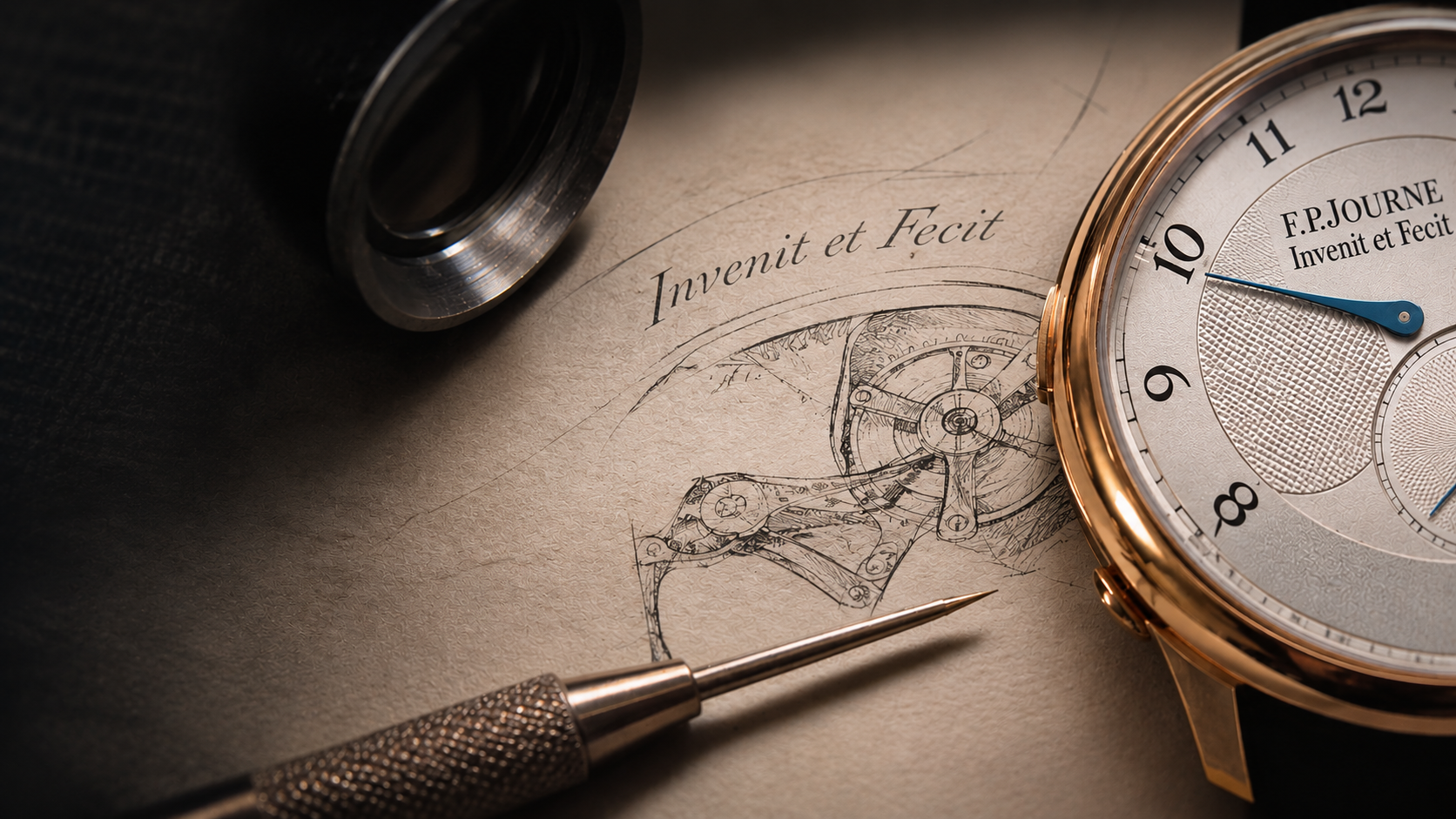
At the Basel Fair in 1999, Montres Journe made its formal debut, bearing the audacious Latin declaration Invenit et Fecit (“Invented and Made”) upon every dial.
Key F.P. Journe Inventions: Tourbillon Souverain, Résonance and Octa

Horological history was rewritten that very spring. With the Tourbillon Souverain avec Remontoir d’Égalité, Journe became the first watchmaker to miniaturise a constant-force remontoir mechanism into wristwatch dimensions, harnessing a blade spring that recharged once every second to drive an impeccably precise dead-beat seconds display.
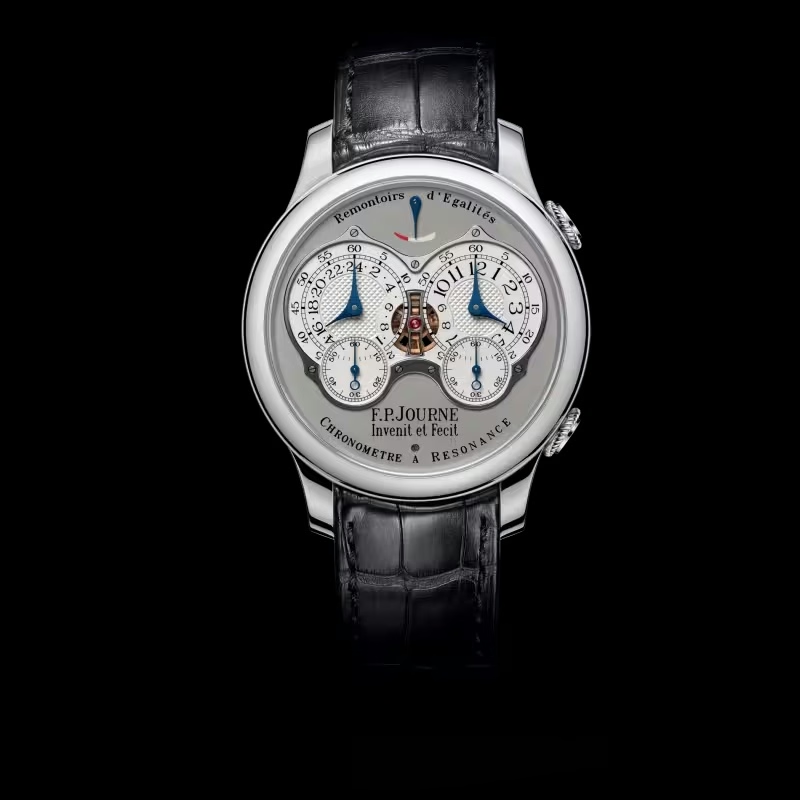
A cascade of seminal inventions followed. When it debuted in 2000, the Chronomètre à Résonance became the world’s first wristwatch to synchronise two balances through acoustic resonance. Two independent gear trains and escapements sit mere fractions of a millimetre apart on a shared mainplate. Exchanging minute vibrational frequencies through the plate and surrounding air, the balances naturally compensate for each other's rate deviations, locking into unison.
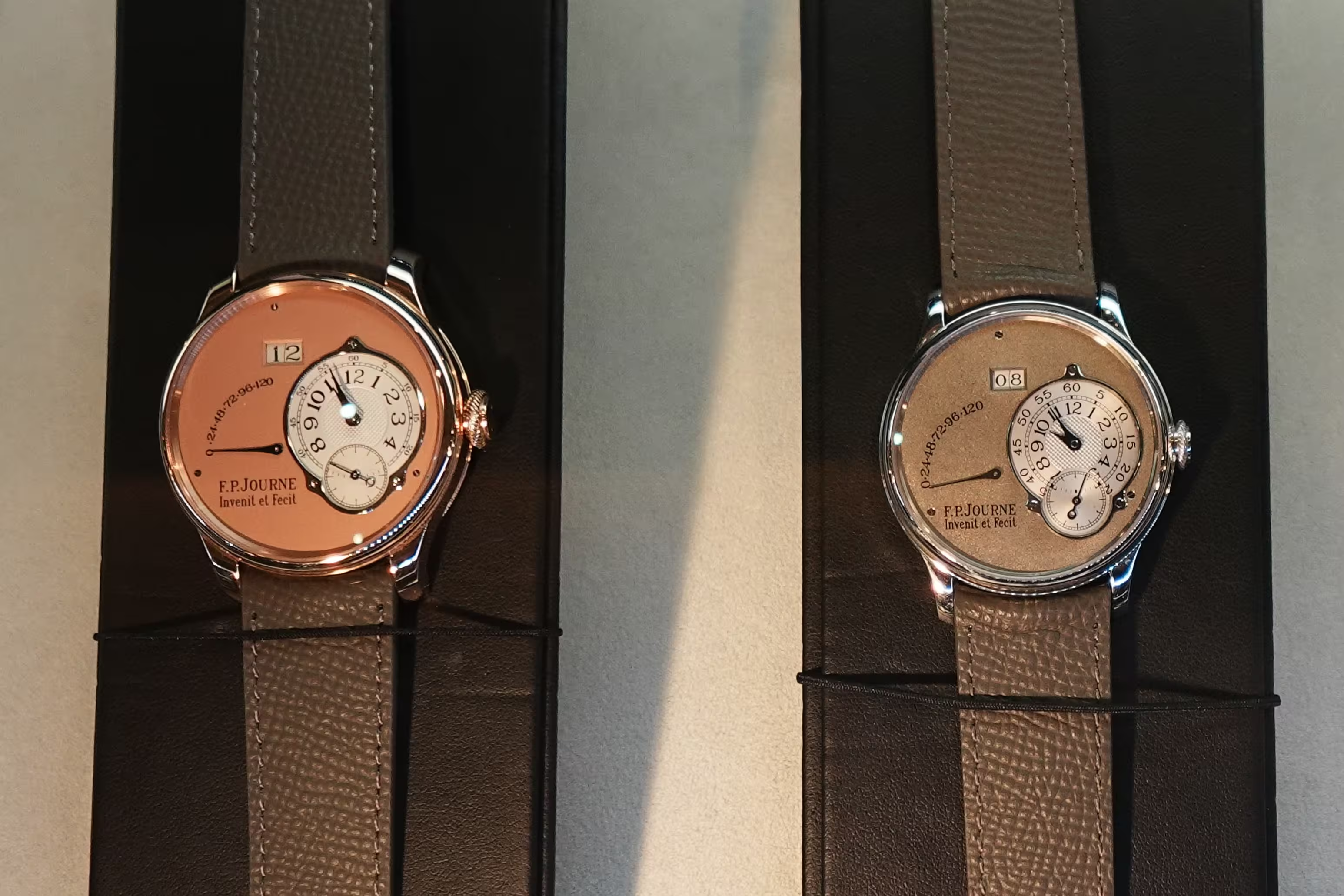
The following year, the Octa Calibre was powered by an automatic base movement boasting over 120 hours of chronometric autonomy. Engineered with an invariant one-millimetre complication recess, it can accommodate modular additions—perpetual calendars, retrograde dates, power reserves, and flyback chronographs—without thickening the base profile by more than a millimetre.
In 2004, Journe discarded rhodium-plated brass in favour of solid 18k rose gold for all movements—a technically demanding choice given gold’s softness and low friction coefficient.
Watchmakers traditionally use rhodium-plated brass or German silver (maillechort) for movements. Gold, which is soft, gummy to machine, and scratches easily under tweezers, requires special knowledge.
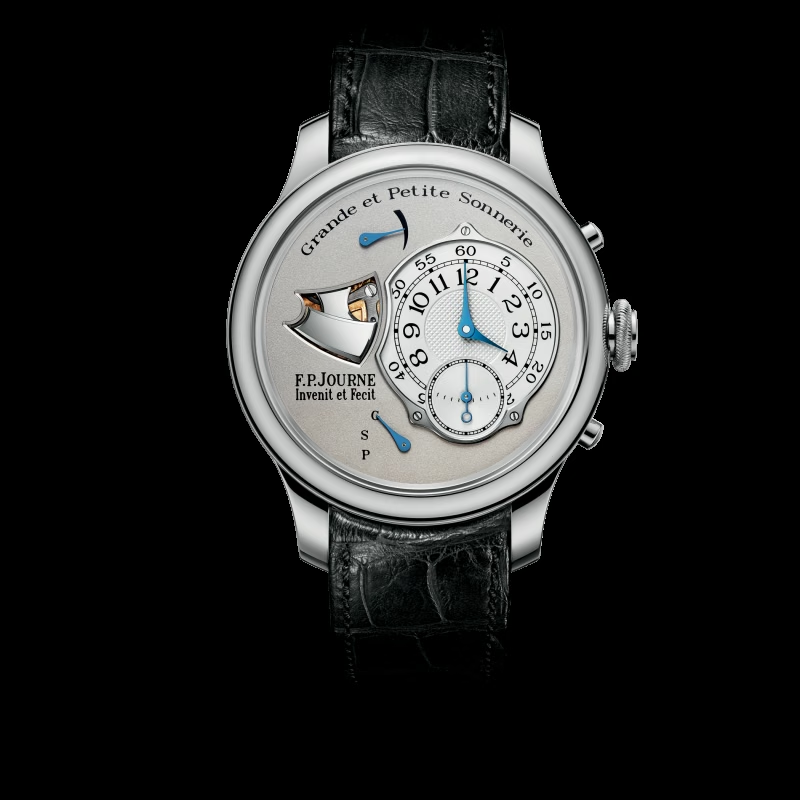
This unique architecture also graced the Sonnerie Souveraine (2005), which featured a grand and petite sonnerie engineered to be completely safe from user mishandling, locking in ten distinct patents.
To safeguard his creative sovereignty, Journe acquired dialmaking workshop Les Cadraniers de Genève and case manufacturer Les Boîtiers de Genève. Recognition followed swiftly: Journe remains the only watchmaker to win the coveted Aiguille d'Or at the Grand Prix d'Horlogerie de Genève three times (2004, 2006, and 2008)—before withdrawing from competition altogether to leave room on the podium for his peers.
The Astronomic Ascent: F.P. Journe’s Rise and Auction Records
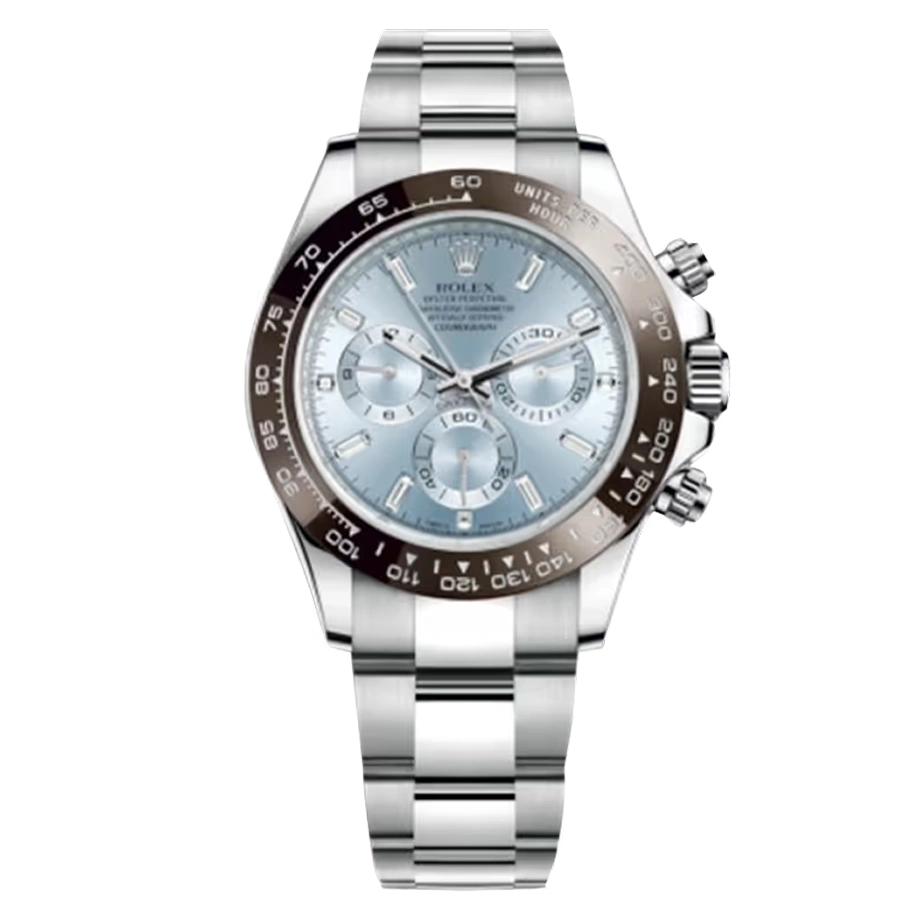
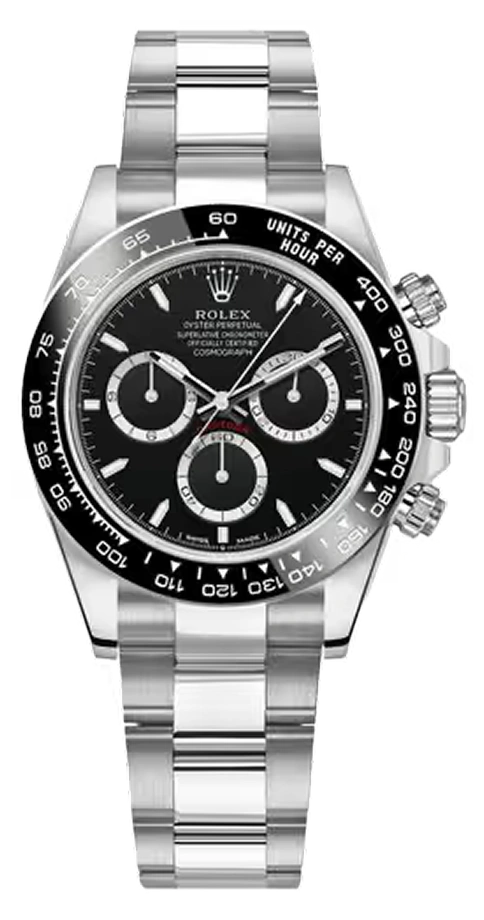
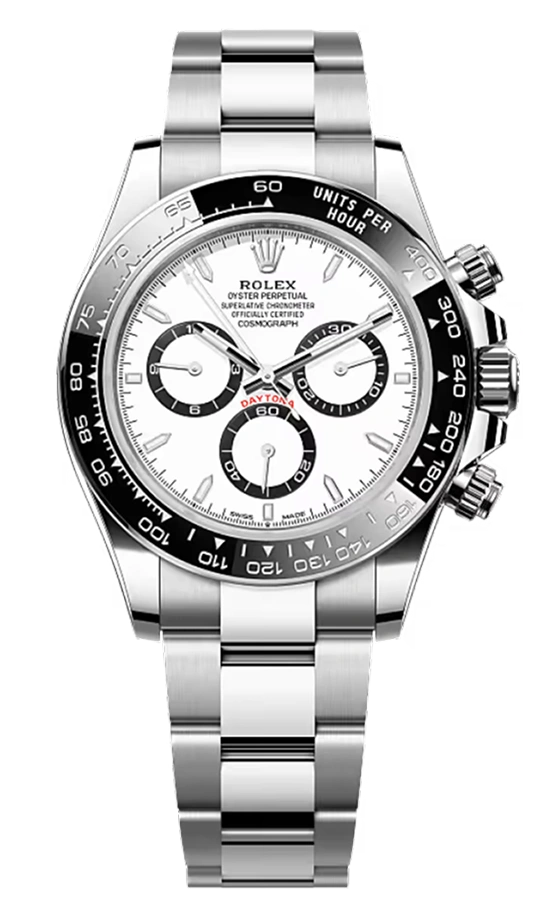
The ignition of the modern Journe boom took hold between 2016 and 2019. As mainstream icons like the steel Rolex Daytona and Patek Philippe Nautilus vanished behind insurmountable waiting lists, astute collectors diverted their capital towards the intellectual purity of artisanal independent horology.
Scholarship accelerated this transition. Auction houses, curated monographs and specialist forums drew sharp focus to the early "brass movement" era (1999–2004). Within months, early Souscription Tourbillons and Résonances climbed from modest $40,000 valuations into the $200,000-plus stratosphere.
Record-Breaking F.P. Journe Auction Results

When the crypto boom and pandemic-era spending unleashed unprecedented liquidity into luxury assets, F.P. Journe became the prime beneficiary. At Phillips’ Geneva Watch Auction: XII in November 2020, Tourbillon Souverain Souscription No. 1 realised CHF 1.4 million, closely matched by the Chronomètre à Résonance Souscription No. 1 at CHF 1.04 million.
Over the ensuing years, Journe’s historical masterpieces have routinely dismantled auction records.
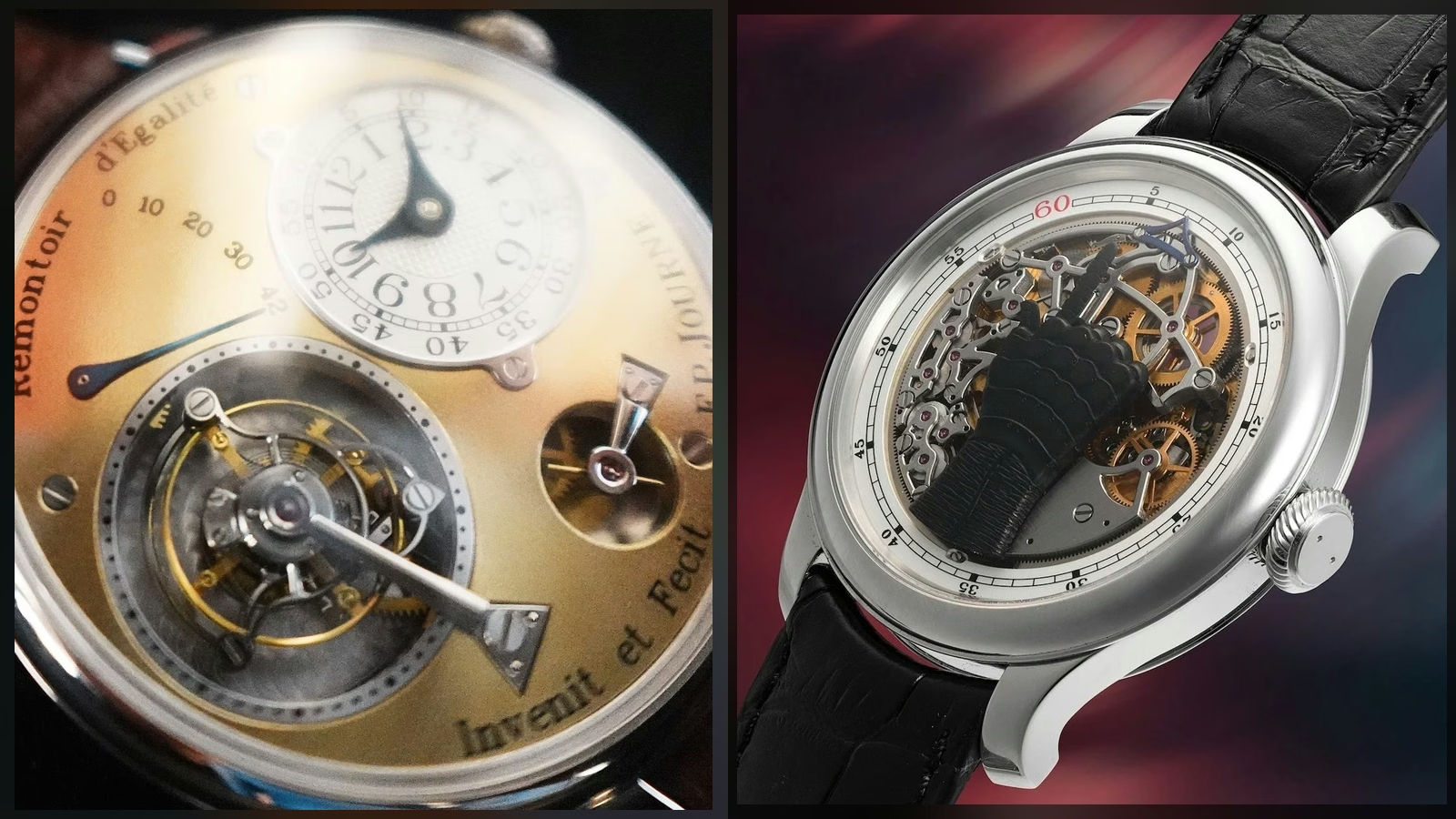
The Tourbillon à Remontoir d'Égalité “15/93”—Journe’s second handmade wristwatch, completed in 1993—realised CHF 7.32 million in 2024. And the bespoke Francis Ford Coppola FFC Prototype, made for and worn by the filmmaker himself, commanded US$10.75 million in 2025.
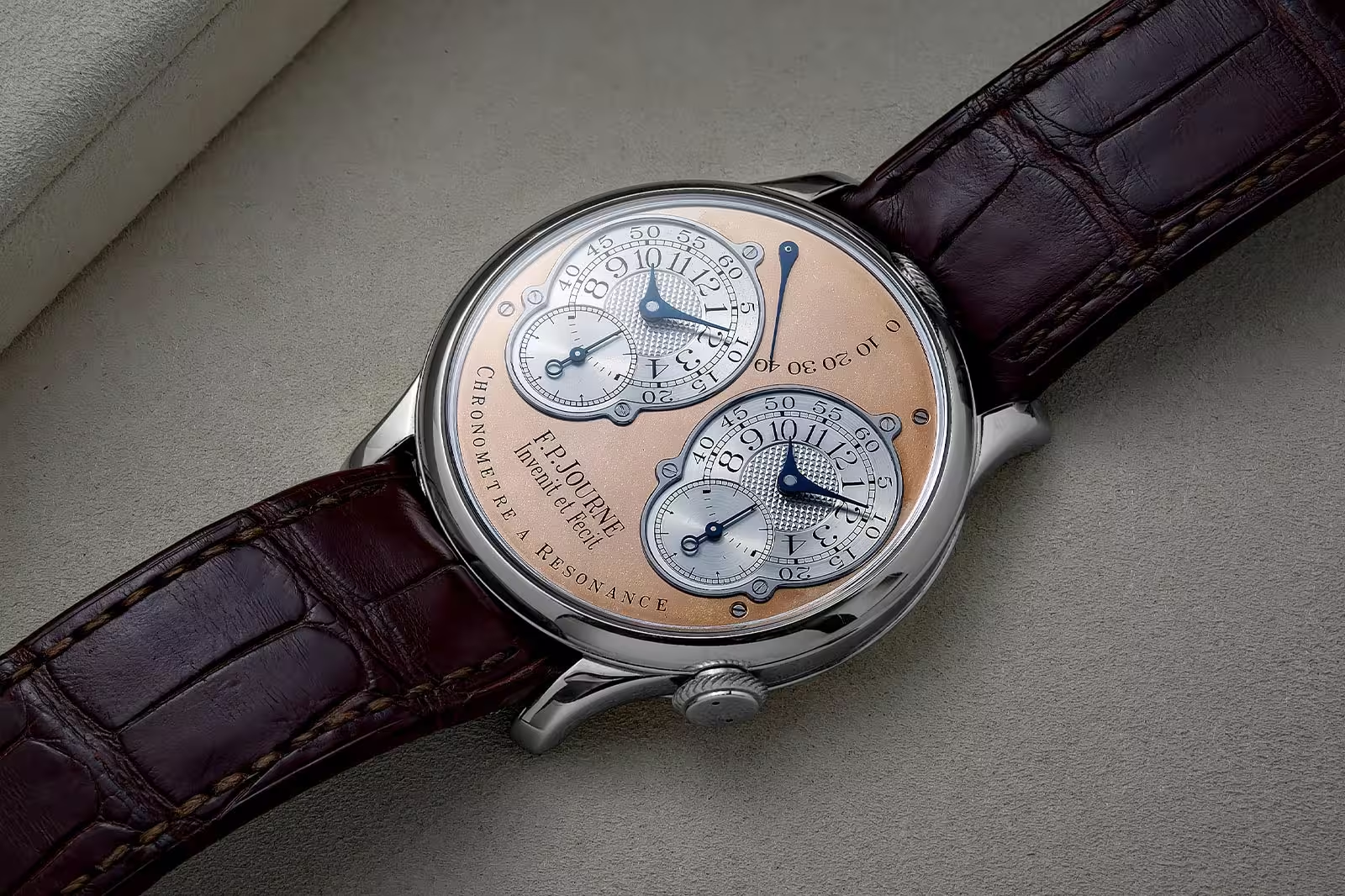
Earlier this year, the legendary Chronomètre à Résonance “Souscription No. 007” set the all-time benchmark for independent watchmaking, commanding US$13.92 million in 2026.
As recently as 8th November 2026, the Phillips Geneva Watch Auction: XXIV proved the enduring depth of the market, with all 14 of its F.P. Journe lots exceeding their upper estimates, and eight of these hammering for above CHF 1 million.
Continued Innovation: The Élégante and Chronomètre Bleu
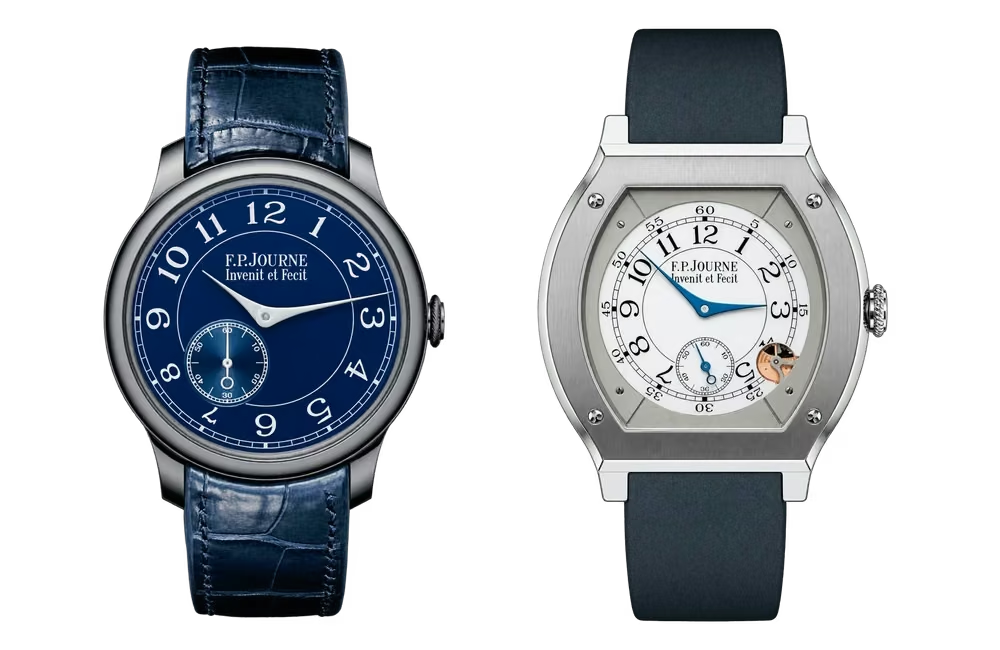
This commercial stardom did not dilute Journe’s appetite for iconoclasm. The battery-powered Élégante (2014) introduced an electromechanical calibre with a mechanical motion sensor that sleeps after 35 minutes of stillness and awakes upon the slightest touch, sweeping its hands into position along the most efficient path. The celebrated Chronomètre Bleu, initially forged out of necessity during the 2008 financial crisis from stubborn, abrasive tantalum, blossomed into one of the most fiercely pursued time-only wristwatches on the planet.
Even as Chanel took a protective 20 per cent non-controlling minority stake in 2018 to guarantee the maison’s long-term autonomy, Journe remained entirely unswayed by corporate fashion. He reinvests profits directly into manufacturing infrastructure and prototype fabrication, notoriously disdaining yachts, supercars and boardroom conventions.
Why F.P. Journe Watches Are So Sought-After
This laundry list of unprecedented accomplishments reads more like a brilliant inventor’s body of work than a mere watchmaker’s.
Today, total production across all Journe collections remains stringently capped at roughly 800 to 1,000 pieces per annum—a drop in the ocean compared to the 1million-plus output of traditional bastions like Patek Philippe.
Yet scarcity and secondary appreciation alone do not explain the fervour. An F.P. Journe wristwatch is structurally and philosophically distinct.
Its 18k rose gold movements provide an unmistakable warmth, substantial wrist heft and total resistance to oxidation, elevated by meticulous hand anglage.
Journe’s architecture also staunchly eschews silicon escapements and synthetic short-cuts. He insists that every component within his calibres must remain adjustable and restorable by an artisan using traditional bench tools two centuries from now, maintaining an unbroken dialogue with the heritage of Breguet and Janvier.
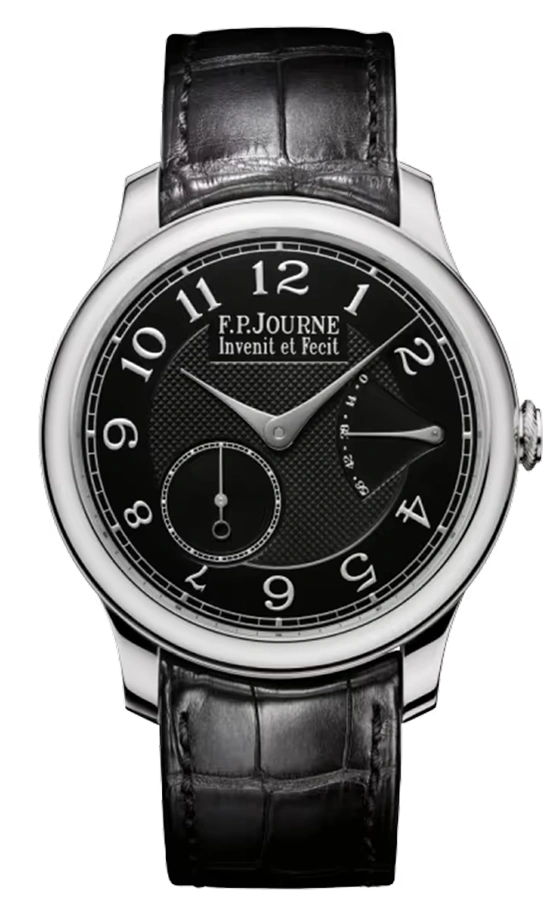
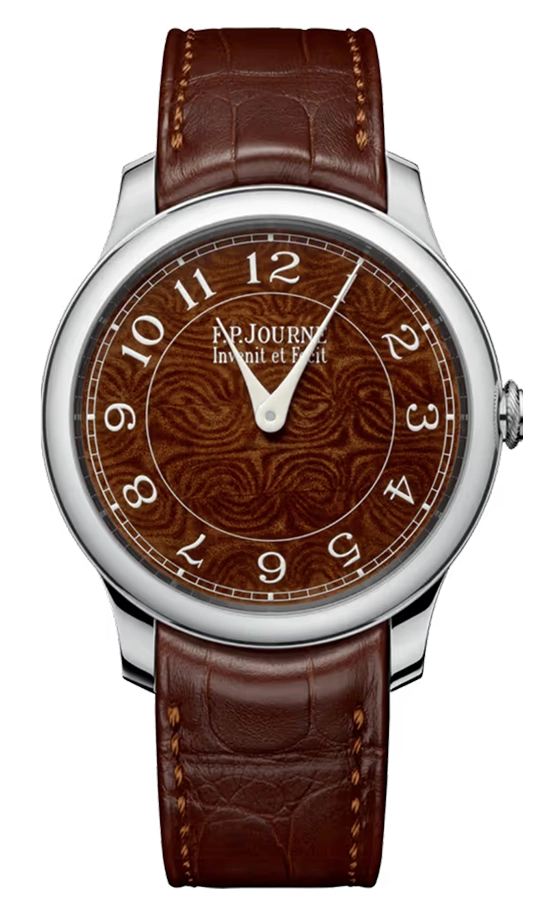
His visual lexicon—off-centred guilloché dials anchored with visible steel screws, flattened rope-knurled crowns and tapered teardrop hands—is immediately recognisable across a room.
While other watch brands conduct marketing surveys and consumer focus groups, F.P. Journe’s strategy disregards market testing. He just “invents and makes” what he likes, while an intimate network of retailers curates his clientele.
Naturally, collectors prize F.P. Journe because his timepieces represent the unfiltered vision of a living master rather than a boardroom. To fasten an F.P. Journe to the wrist is to possess the mechanical soul of an 18th-century genius who simply happened to live and construct in our time.
At SRK Haute Horlogerie, some of the most beautiful and rarest F.P. Journe pieces have passed across our desks. With them comes the inevitable question: where do we think prices will go? We will simply quote an F.P. Journe senior executive with whom we had dinner last summer: “François-Paul will be the first watchmaker to break $100 million.”
As the watch and art markets continue to blend, we see no reason that will not, in time, prove true.